← Insights / Cesar Sasson Pinto / Article / City
The Temple of Vision: Reflections on the Opening of the Lucas Museum
On the occasion of the long-awaited opening of the Lucas Museum of Narrative Art in Los Angeles, curator Cesar Sasson reflects on the enduring power of visual storytelling, the blurring of boundaries between high and low art, and the universal need for spaces that celebrate the stories that define us.

By Cesar Sasson Pinto
Panama, City
Originally published in Spanish
Re-edited and published by The Art Lab Galleries — September 14, 2026 · 5 min read
Small Title

Lucas Museum Courtesy
Share


Download article
With the long-awaited opening of the Lucas Museum of Narrative Art in Los Angeles, we are invited to reflect on the enduring power of images and visual storytelling. From the early student shorts of a young George Lucas to the realization of an ambitious “museum for the people,” this is an intimate journey through memory, cinema, and the stories that have accompanied us throughout our lives.
Cinema has been my constant companion for as long as I can remember. I vividly recall my university years studying engineering, when the campus auditorium became the stage for a formative awakening during a screening cycle titled Take 5 Student Films. There, projected as short thesis films, I encountered the nascent vision of a young George Lucas with THX 1138 and Francis Ford Coppola with an early iteration of The Rain People, alongside works by other emerging filmmakers. These were flashes of brilliance still in development—flashes that, unbeknownst to us at the time, would reshape our entire understanding of visual narrative.
It is for this reason that the announcement of the Lucas Museum of Narrative Art opening its doors in Los Angeles—after a decade of delays—feels like far more than a routine cultural update. It resonates as the natural culmination of a shared, lifelong passion.
Valued at one billion dollars and housed in an imposing, fluid structure designed by Ma Yansong of MAD Architects—resembling a landed spacecraft set against expansive gardens by Mia Lehrer—the museum founded by Lucas and his wife, Mellody Hobson, arrives with a premise as bold as it is essential: to challenge the hierarchies of the traditional art establishment in celebration of what they simply term “narrative art.”
What makes the curatorial approach compelling is the daring nature of its visual juxtapositions and its eclectic exhibition design. On the ground floor, an introductory historical sequence spans digital reproductions of the Lascaux cave paintings and the Sistine Chapel alongside select physical artifacts, reminding us that every work of art, at its core, carries the seed of a story.
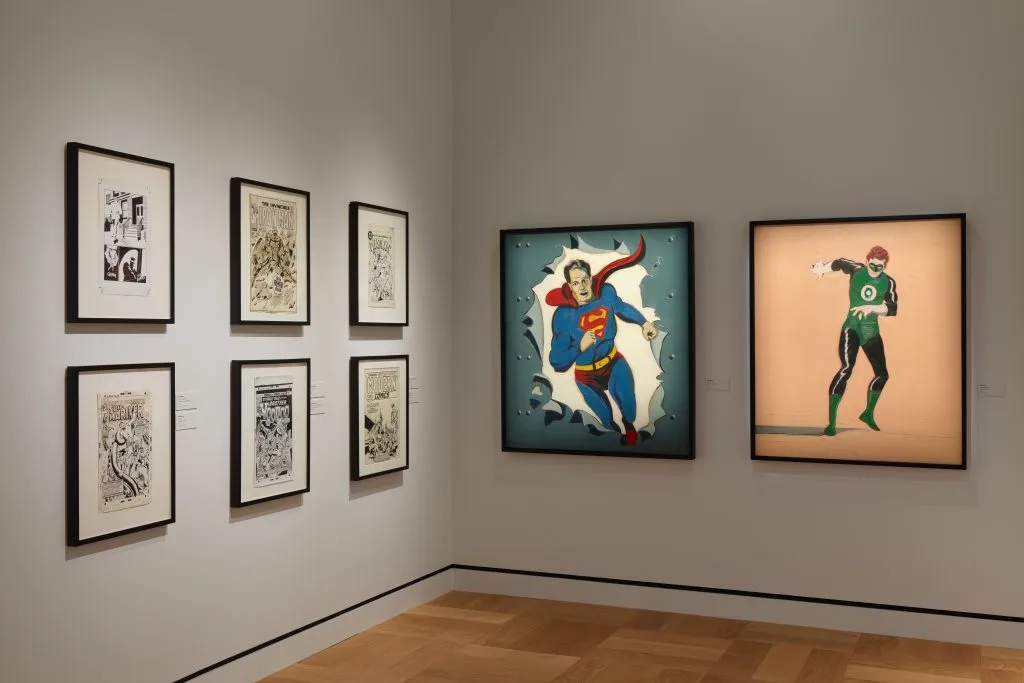
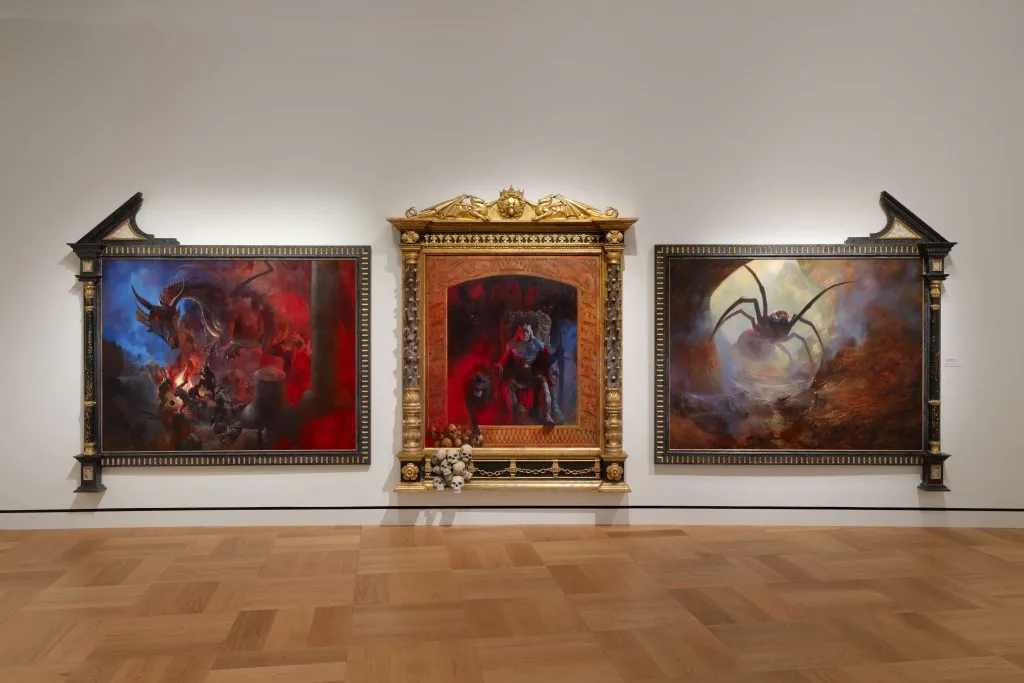
Moving to the upper galleries, the museum reveals its truly iconoclastic character. Here, the worlds of Norman Rockwell and Maxfield Parrish sit comfortably alongside fantasy illustration masters like Frank Frazetta, as well as an expansive comic and graphic novel collection featuring artists from Charles M. Schulz to R. Crumb.
For purists accustomed to the white cube model, this collision may feel disruptive. Seeing digital reproductions of Caravaggio or Gentileschi in dialogue with original oil paintings, or observing the friction between contrasting visual styles, dismantles the artificial boundary between "high" and "low" art. In doing so, it delivers a liberating truth: human creativity is not defined by institutional labels, but by the fundamental drive to communicate myths, anxieties, and wonder.
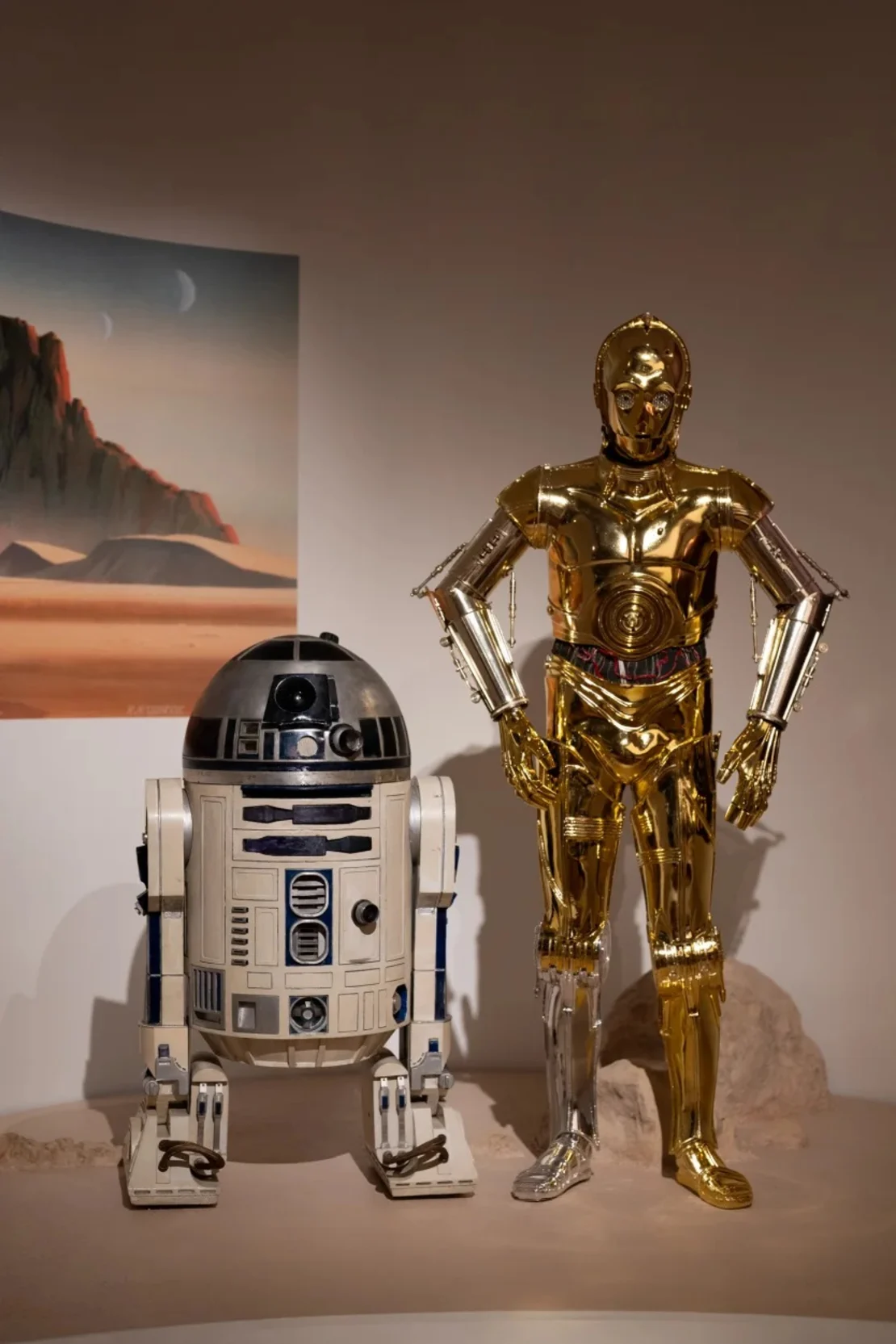
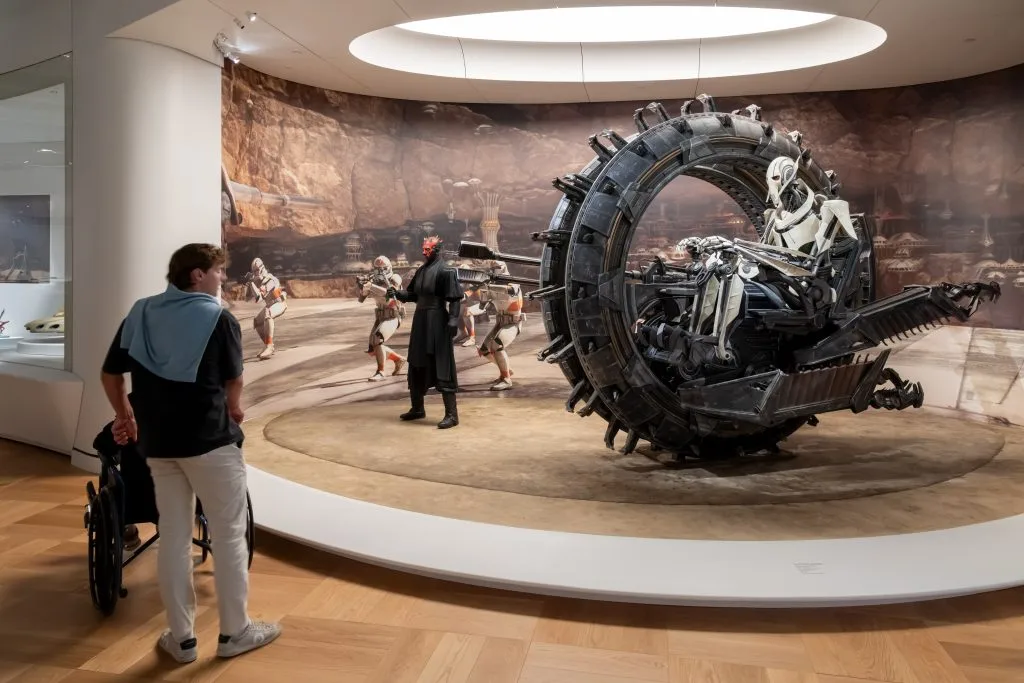
At the center of this experience lies the realm of cinema: original Star Wars memorabilia, screen-used suits for R2-D2 and C-3PO, the Millennium Falcon, and the conceptual artwork that shaped generations. George Lucas has described this institution not as a conventional museum, but as a "temple of art for the people."
For those of us whose early aesthetic experiences were shaped in dark movie theaters, on printed pages, and through the images that defined our upbringing, the inauguration of this museum feels like a celebration of our collective visual biography. Whether this vast repository of imagination—supported equally by physical artifacts and digital media—conforms to classical museum standards remains a secondary debate. What truly matters is that we now have a dedicated space reminding us why stories endure, why images resonate so deeply, and why we continue to gather around the enduring magic of narrative.